Photographing India From a Kite<br><h6>Nicolas Chorier is a pioneering aerial photographer who uses kites to capture his amazing shots of India, Uzbekistan, and other stunning destinations. We spoke to him about his unique aerial photography technique and many adventures.</H6>
Jan 19, 2026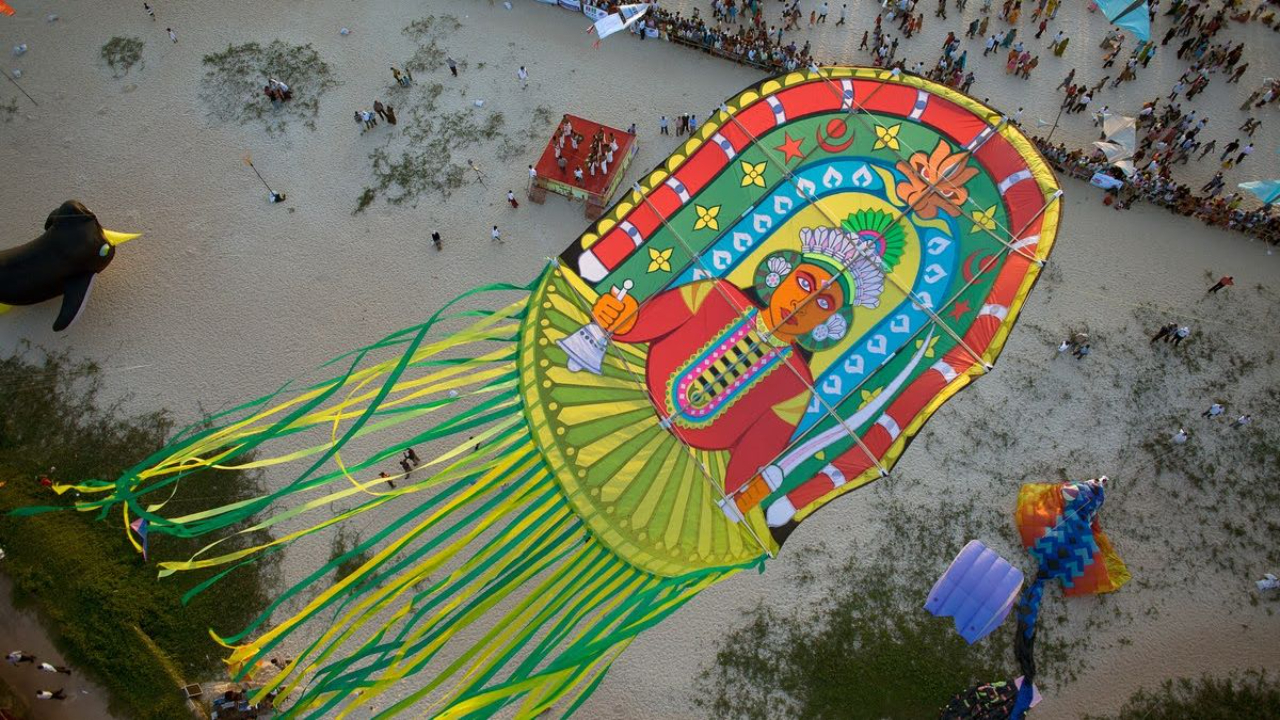
A kite flies at the Mangalore Kite Festival. Nicolas was inspired to start using kites for aerial photography after photographing a story on traditional kite-making in India in 1996. © Amazing Aerial Agency / Nicolas Chorier
 By Rebecca Duras
Drones are the most popular aerial photography tool, at Amazing Aerial and in the aerial photography community at large. Modern technology makes them portable and convenient, with a relatively low barrier to entry.
Nicolas Chorier is one of those creatives who is not content to be just like anyone else. In 1996, he began taking aerial photos with a kite. He credits his kite with some of the rare shots he’s been able to capture in India, Uzbekistan, and beyond. Although the 63-year-old photographer no longer uses kites in his work, they still mark a formative period in his career.
Amazing Aerial Magazine spoke with Nicolas about his choice to use kites for aerial photography, the many years he spent living in India, and the amazing photographs he’s captured along the way.
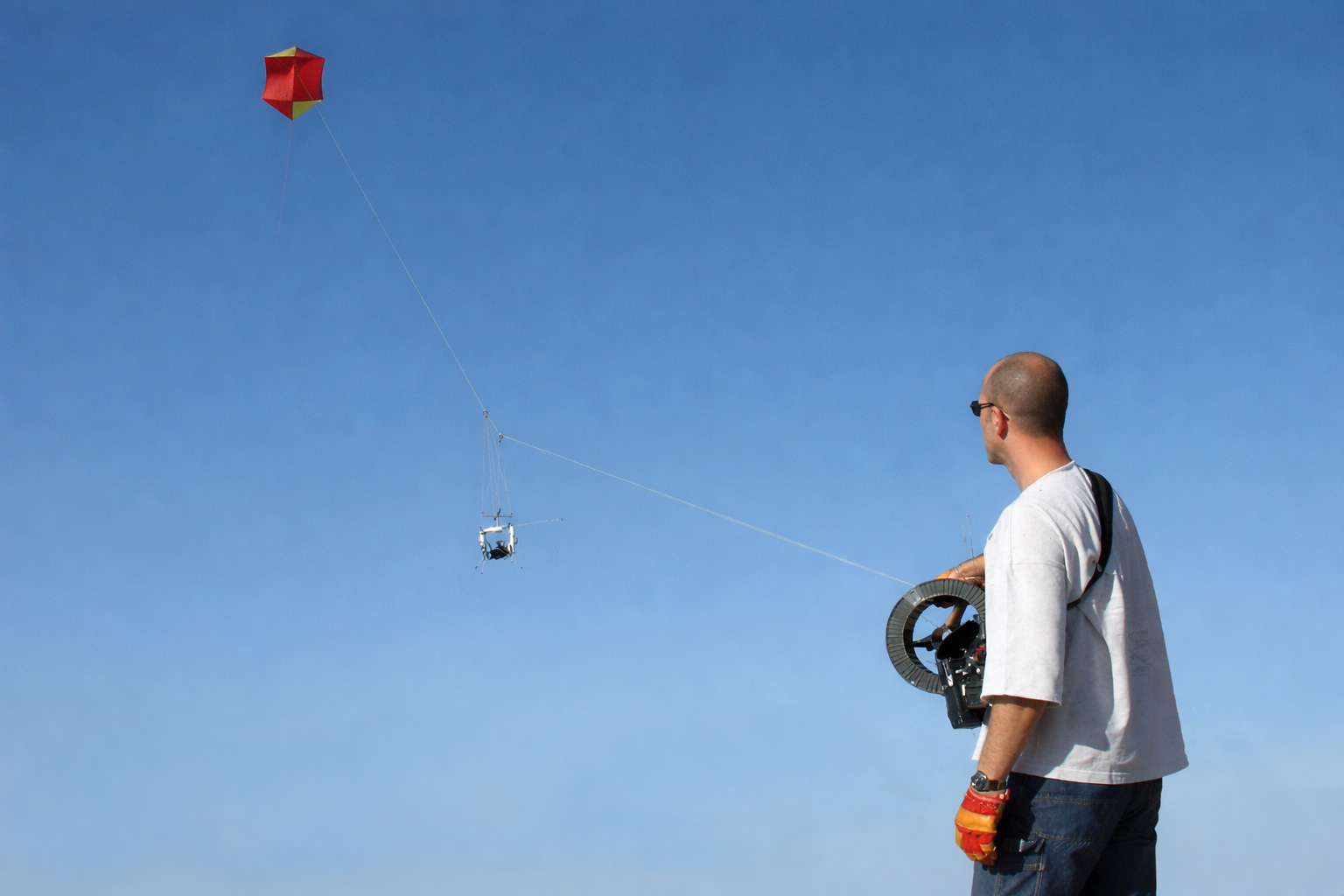
Nicolas Chorier flies a kite rigged with a camera, his preferred method for capturing aerial photos. © Amazing Aerial Agency / Nicolas Chorier
How did you get started with photography?
I’ve been a photo enthusiast since I was a teenager. I got my first camera when I was a kid, a 6x6 from the fifties. Then, when I was 12 years old, my father gave me a 135mm. While growing up, my family gathered every week by the fireplace as my father showed hundreds of Kodachrome images he took during his 20 years in Africa on an old slide projector. Viewing those family slideshows definitely formed the basis of my love of photography and travel.
How did you first begin working with aerial photography? When did you start using a kite for aerial photography and taking your first steps towards becoming a professional?
I was flying kites for years and was aware that kite aerial photography had existed since 1888, when it was pioneered in southern France.
I first traveled to India in 1996 for the purposes of a photo report on traditional kite-making in South and Southeast Asia and decided to try this technique of kite aerial photography during that first trip. After I settled down in Malaysia, I got more assignments from the local Tourism Ministry, always using kites.
Back home, in search of a new way of subsistence, closer to nature and creativity, I thought it would be interesting to explore the potential in kite photography. I’ve always liked to fly, everything which could fly, and I’ve always been interested in ecology and eco-friendly techniques. Using a kite powered only by the wind to practice aerial photography was a challenge, especially as it requires various hand-crafting skills. I also loved the idea of getting into electronics and mechanics for the purposes of designing the equipment, designing and sewing the kites, and getting enough practice in kite-flying to be safe in any situation. I also loved the idea of exploring the potential of this photography, obviously, because at the end of the day that’s what it’s all about. After I mastered this technique, I worked in France for ten years, mostly for architects and collectivities.
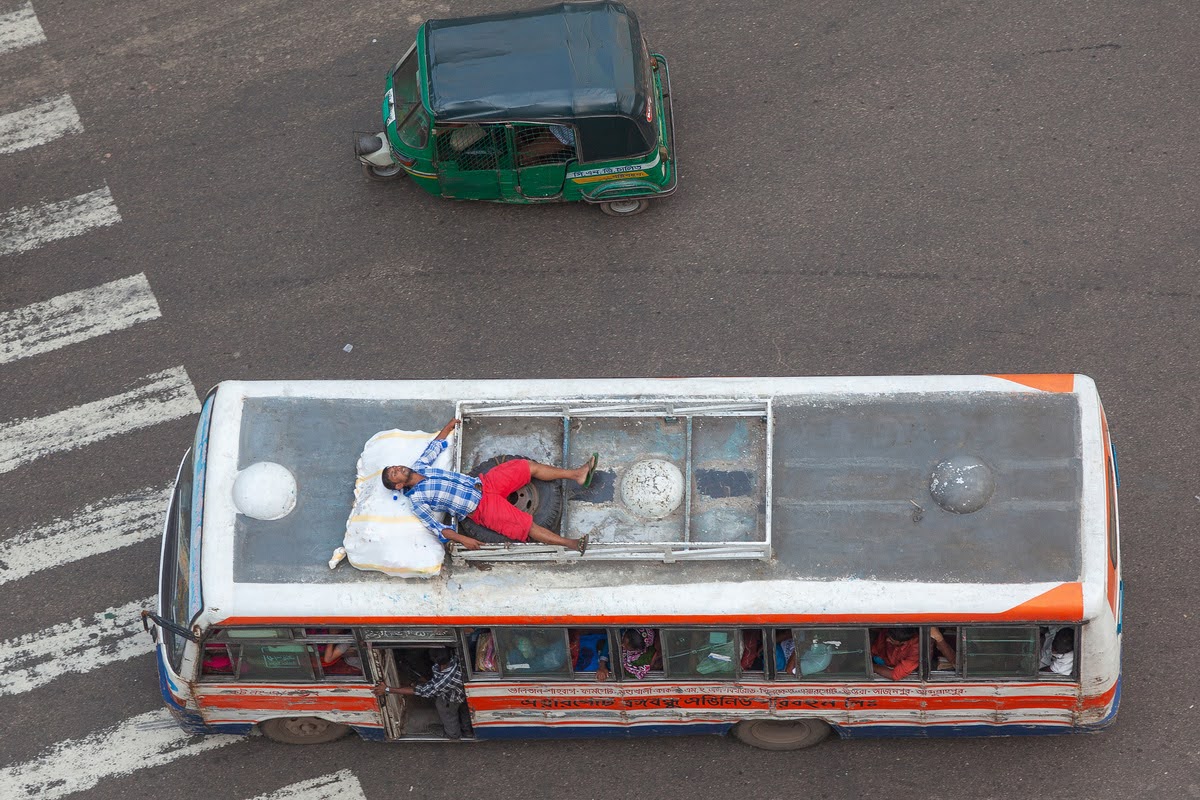
A man rides on top of a bus in Dhaka, Bangladesh. Although Nicolas has used other methods for aerial photography, he finds kites to be the most versatile. © Amazing Aerial Agency / Nicolas Chorier
Have you ever used other equipment, or did you always prefer using a kite for aerial photography? Were there any drawbacks to using kites exclusively for aerial photography?
I think I’ve experienced all kinds of aerial platforms for shooting! While working in France, I often flew in small planes, ultralights, especially autogyro, which is a fantastic tool. I also used helium balloons, small zeppelins, and even a hydrogen balloon in India, where helium was not available.
I chose the tool I would use depending on the target or shooting context, but I found that the kite was often the best choice. Plus, I love the idea of using the wind only for aerial photography.
After I moved back to France from India in 2016, I stopped doing kite photography. Although I trained as a drone pilot in 2017, I never really worked with a drone, even though it’s a fantastic tool, since it’s completely opposite to my philosophy.
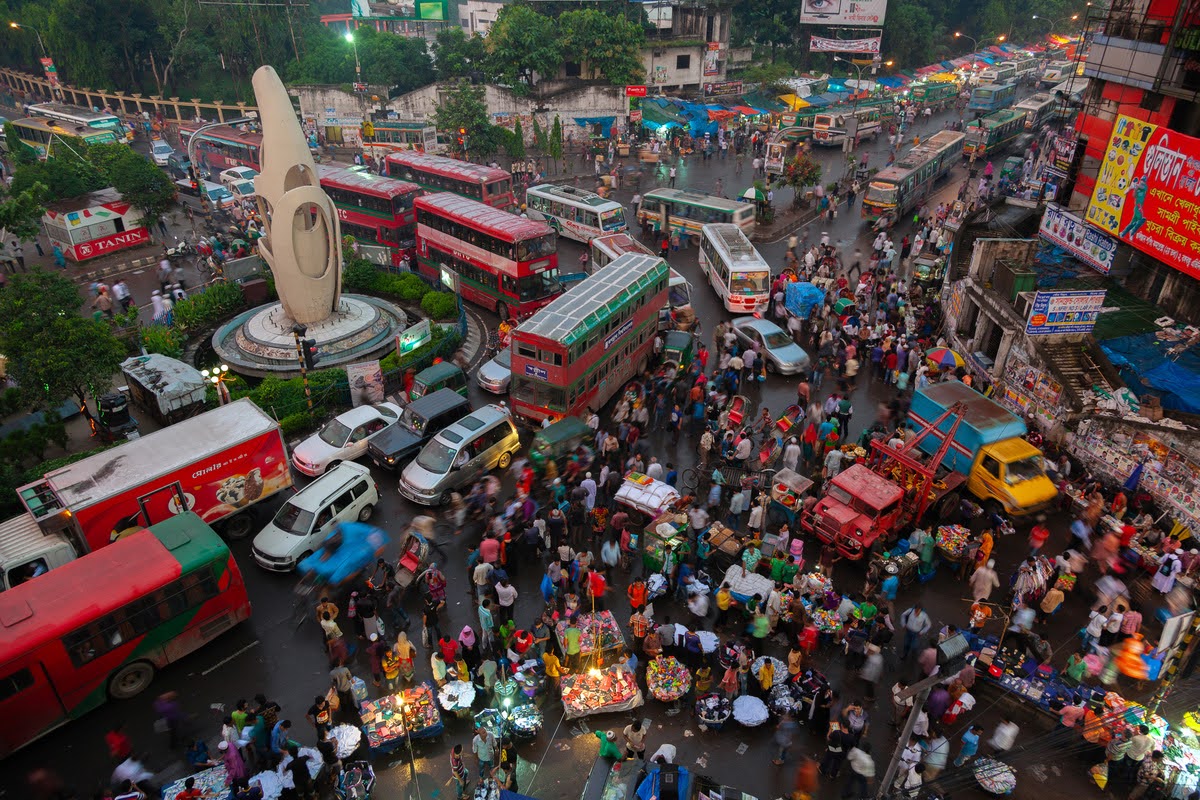
A traffic jam forms around the Gol Chattar monument in Dhaka, Bangladesh. Nicolas notes that one of the benefits of kite photography is that you can shoot in busy urban locations without disturbing others. © Amazing Aerial Agency / Nicolas Chorier
What are the benefits of using only kites for aerial photography?
Before “the drone era,” the advantages were numerous compared to helicopters and other aerial craft. The whole rig is lightweight, easy to set, non-intrusive, silent and eco-friendly. It makes it easy to remain on a site for hours without disturbing nature, and to remain on standby for the right moment to shoot.
A kite airborne camera can be very steady, and allows relatively slow apertures. It also allows aerial close-ups with wide-angle lenses. That was unique. I can fly my camera from 5 meters up to 300 meters.
It’s possible to work in urban spaces, crowded environments, non-accessible sites, sensitive places like religious sites, wild sanctuaries, heritage pieces like the Taj Mahal, and to do close-up shots of all these exciting subjects in a way which you cannot with any other aerial media.
Kite aerial photography makes me interact closely with the environment of the picture. I meet the people on the site and spend time with them. I can infuse the image with the spirit of the monument I’m shooting, or with the ambiance and history of the surroundings.
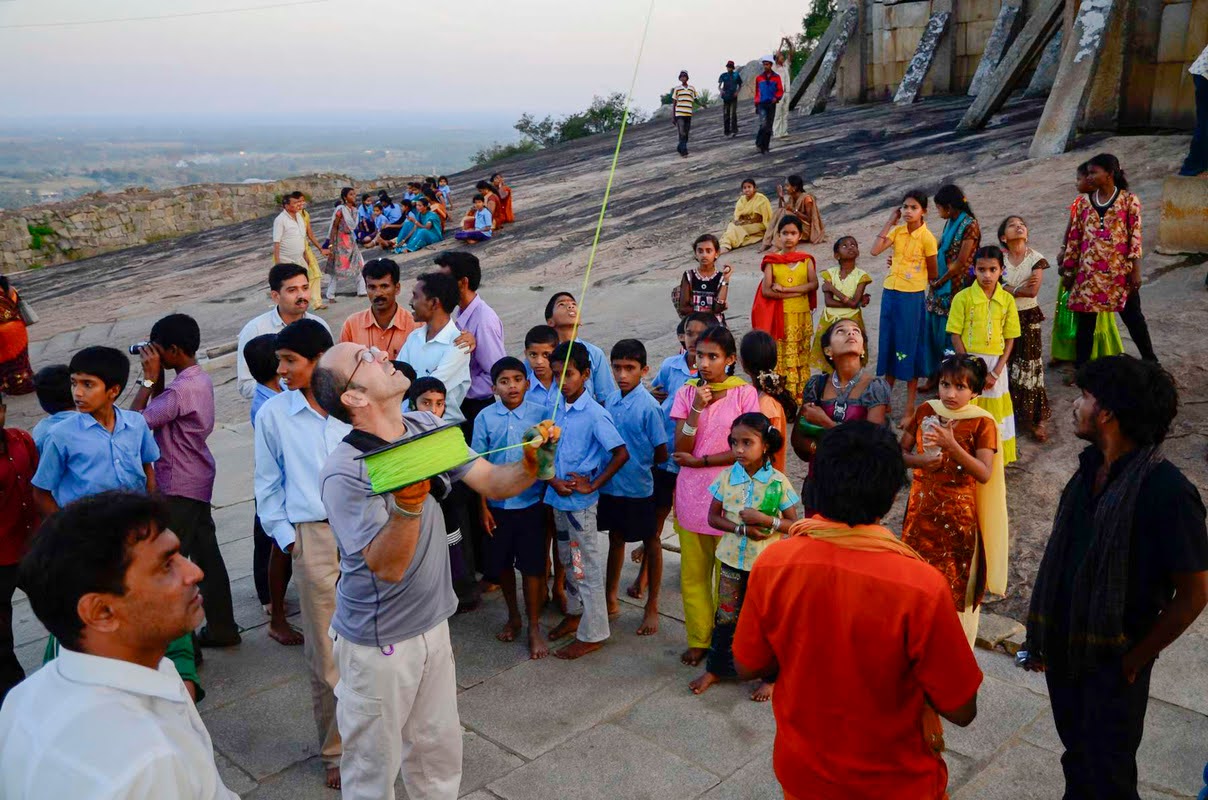
A group of kids (and a few adults) watch Nicolas fly a kite in Bangalore, India. © Amazing Aerial Agency / Nicolas Chorier
What factors can affect the success of your flight with a kite? What environmental factors do you have to take into account before a flight?
I’m not really limited by weather conditions in terms of wind. I can fly with a very gentle breeze and in gusty winds up to 40 mph, although of course it’s better to fly in a breeze. I always consider that light is the main factor in deciding to shoot or not, more than wind conditions. I manage to shoot most times I set out to try.
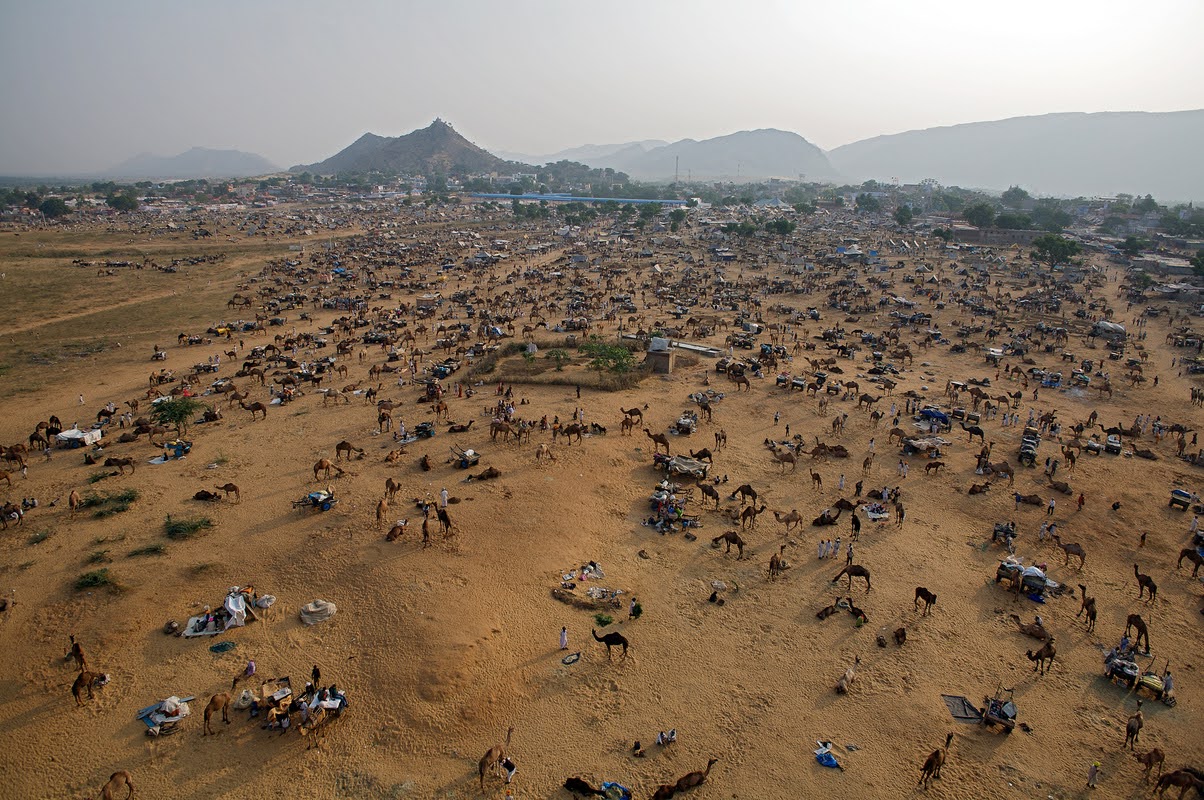
The Pushkar Camel Fair, Rajasthan, India. © Amazing Aerial Agency / Nicolas Chorier
You mention that one of the benefits of kite photography is that you are able to photograph sites with limited access. How does this work, and why is it easier than drone photography? What are some places you’ve been able to photograph thanks to this?
As I mentioned, I worked a lot before drones arrived, and before that kite photography was the only way to do low altitude shots, aerial “close-ups.” Permission to fly is much easier to get from authorities with a kite. I could access “no-fly zones” with no specific hassle, for example in Uzbekistan, and in 99% of India.
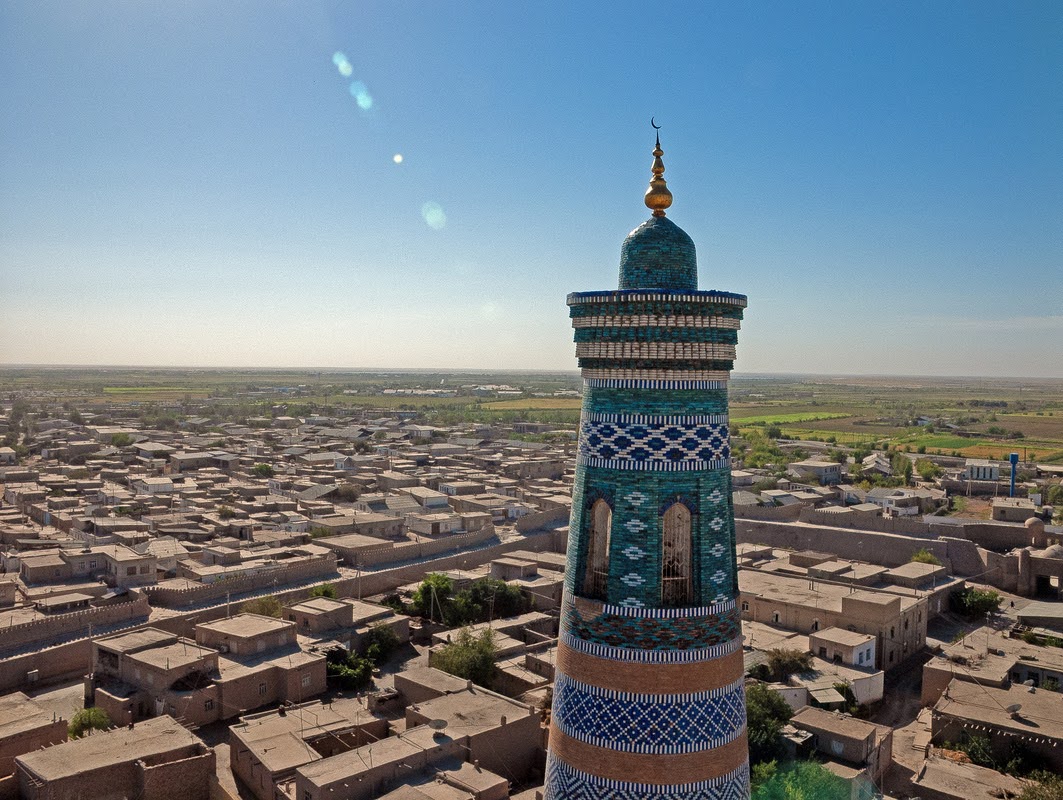
An elaborate minaret rises above the city of Khiva, Uzbekistan. With a kite, Nicolas was able to get early aerial photography permission in parts of the world which normally restrict aerial photography. © Amazing Aerial Agency / Nicolas Chorier
Now’s a good time to talk about India, where you lived for many years, specifically in Pondicherry. What brought you to this city, and what inspired you to stay there?
After a few years traveling in India for different assignments and for my own pleasure, I published a big coffee table book about India in 2007. I got an opportunity to settle down there with my wife and our two very young kids. I promptly created my own aerial photo company, registered in India, and quickly got various jobs since I was the first professional offering such services in India. Aerial photography was heavily restricted at the time, so I was one of the only ones able to offer this service. I worked there for 7 years.
Your business in India worked for a lot of high-profile clients, including many state governments. How did these collaborations come about, and what were these projects like?
I had different sources of business. My first real Indian assignments were with some architects from Gujarat who were deeply involved in heritage conservation, mostly in Rajasthan. I kept working for them for years. Once in Pondicherry, my first job was for the Ministry of Tourism. Then, the information that there was a guy in Pondi who could shoot aerials went a little viral within departments and collectivities, as well as town planners and real estate agents. I also enjoyed working for some local NGOs who were concerned with coastal erosion, illegal dumping sites, human settlements, farming, and similar topics.
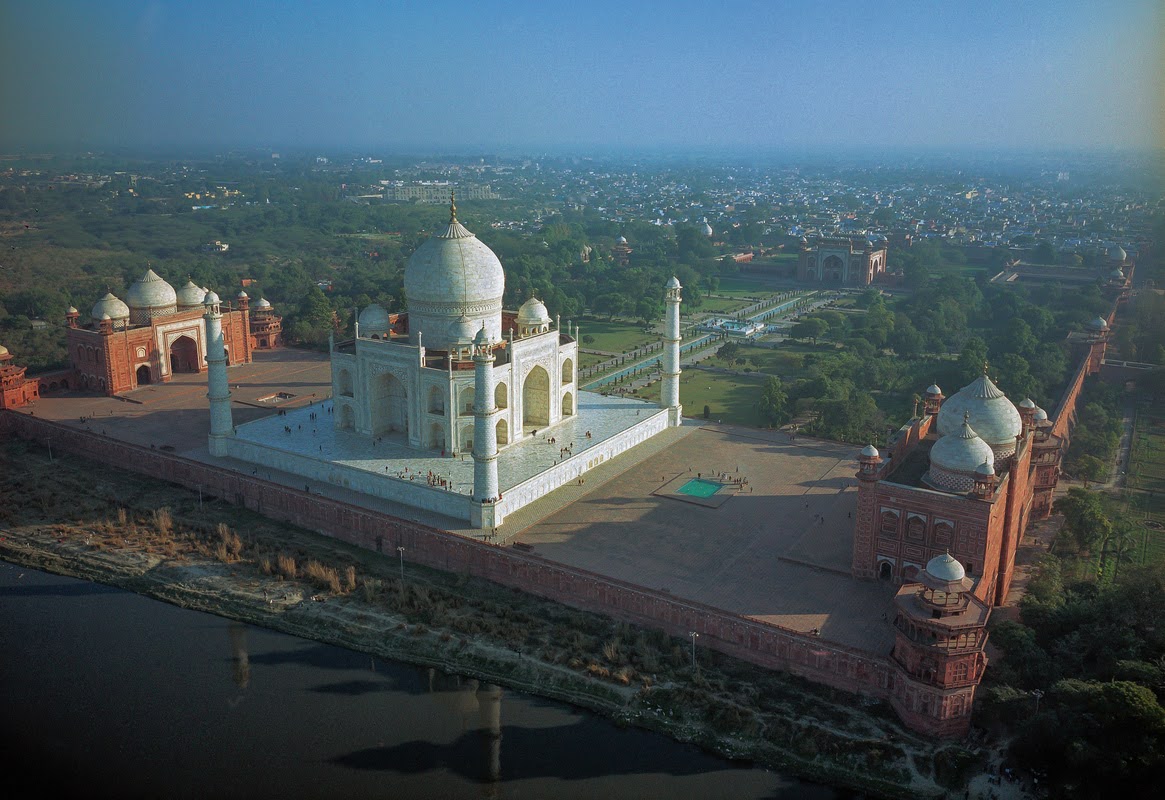
The Taj Mahal in Agra, India. Nicolas’s years in India were a formative period for his photography. © Amazing Aerial Agency / Nicolas Chorier
You’ve also collaborated with massive international organizations such as UNESCO. How were you able to build those collaborations?
For UNESCO, I had planned a private trip to Laos, so I checked if UNESCO was doing something there. I found a mission based in Luang Prabang and contacted them, offering my services. Within three weeks, I found myself flying my kite from a prog cruising down the Mekong, shooting every 20 meters for 3 miles along the banks of the river in the city, checking the erosion process. It was just a thrill!
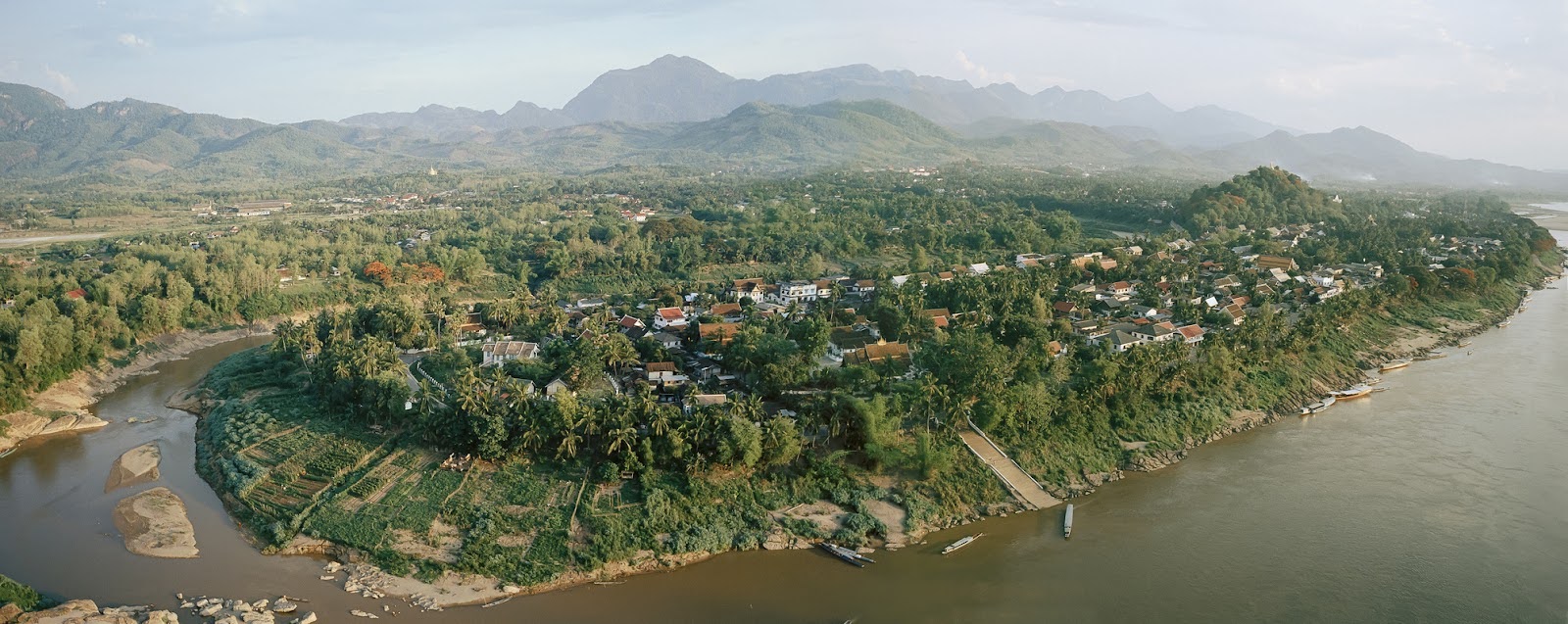
The ancient capital of Luang Prabang, Laos. Nicolas photographed the city as part of a collaboration with UNESCO. © Amazing Aerial Agency / Nicolas Chorier
During your time in India, you photographed some amazing events that are normally hard to capture from the air, such as the Kumbh Mela. What was this experience like? How did using a kite make it easier to get those images?
The Kumbh Mela was one of the most thrilling blasts I’ve ever experienced. It’s so unique to be surrounded by millions of people, literally. I attended the 2001 Maha Kumbh Mela, the Great Kumbh Mela.
I spent three days hanging around the crowd, witnessing things you can only see at the Kumbh. Faith, fervour, pilgrims settling in real villages they recreate for their time on-site with giant movie screens showing Bollywood blockbusters, saddhu zones where they showcase spiritual protocols, processions beyond imagination…
There wasn’t enough wind for two days, so I found my launching site on the opposite bank of the Yamuna river, safer, and upwind from the hot spot so that my kite will fly towards the crowd as much as possible. The next day I flew in the early morning, with my heart beating at 120 BPM!
It was the very first aerial shot of the Kumbh, ever, and I was overwhelmed by my luck and that exclusivity! Even the military helicopters were not allowed to fly, no VIP, nobody. I only got permission to fly from the authorities because I was commissioned by the Ministry of Tourism to shoot various sites in the state. I also shot a few seconds of video, which I sold to the BBC in the media camp, which had hundreds of other media outlets from the global press, and they played it on TV almost live. That was fun!
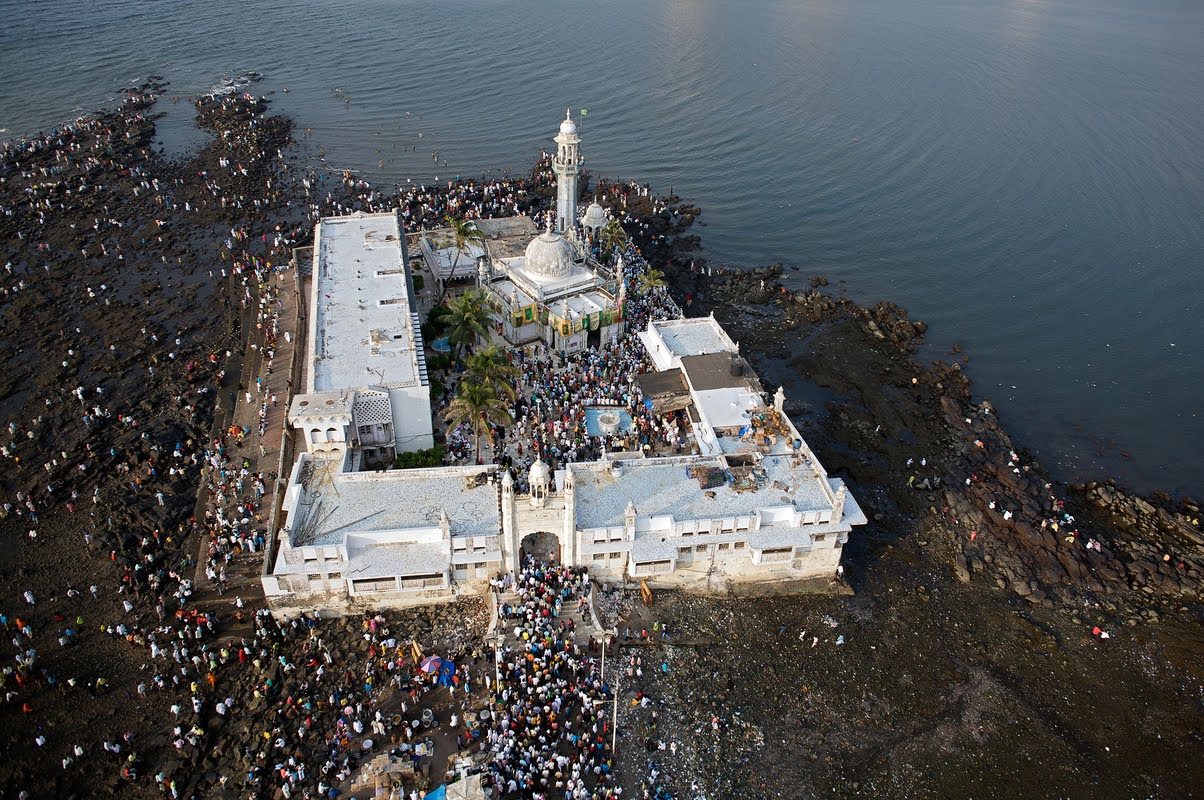
Worshippers enter Haji Ali Mosque in Mumbai, India. Nicolas photographed numerous religious festivals while in India, including the Kumbh Mela. © Amazing Aerial Agency / Nicolas Chorier
What types of scenes draw your eye while you are photographing India?
It’s endless. The architecture, the colours, the crowds, nature in all its forms!
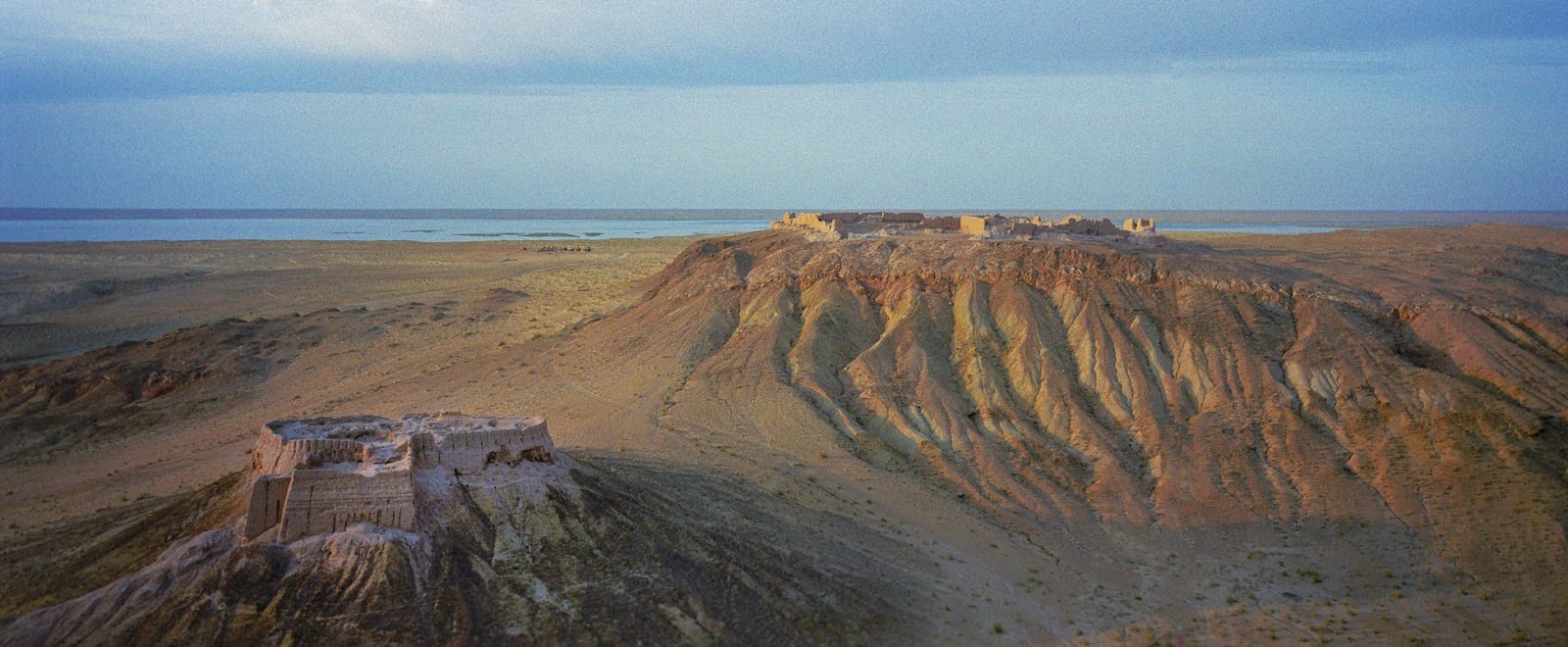
Ayaz Kala fortress in Uzbekistan, one of the diverse monuments and locations Nicolas has been able to photograph. © Amazing Aerial Agency / Nicolas Chorier
Besides India, you’ve also traveled extensively through Asia. What are some of your favorite places that you’ve been? How easy is it to travel with the kite?
I enjoy all destinations for different reasons, but shooting in Uzbekistan was quite unique because I was, again, the first aerial photographer to get permission to fly. It was the same feeling as for the Kumbh. And the country is amazing.
Travelling with a kite is easy. Sometimes, when passing through the security check at airports, you need to justify having such bizarre equipment with a video transmitter, remote camera, kites, and a 300 meter-long string.
That’s not to say all of my trips have been successes. I was working in Mexico with a marine biologist, shooting and filming humpback whales and the devastating “whale watching activities” on the West coast. While standing by in the middle of the Bay, with my kite ready in the sky and the camera ready to act, but aimed horizontally, suddenly a big whale jumped entirely out of the water, nose pointed up, straight up at my camera. It was less than 4 feet below the camera and just 20 meters away from our boat! Unfortunately, it took me a couple of seconds to remotely operate my camera and make it point down, while it only took one second for the 18-ton mammal to be back in the sea. I only got the tail. This is my worst failure, which is still painful, but also my best memory, being so close to heaven!
This interview was lightly edited for length and clarity.
See More Stunning Photos Below!
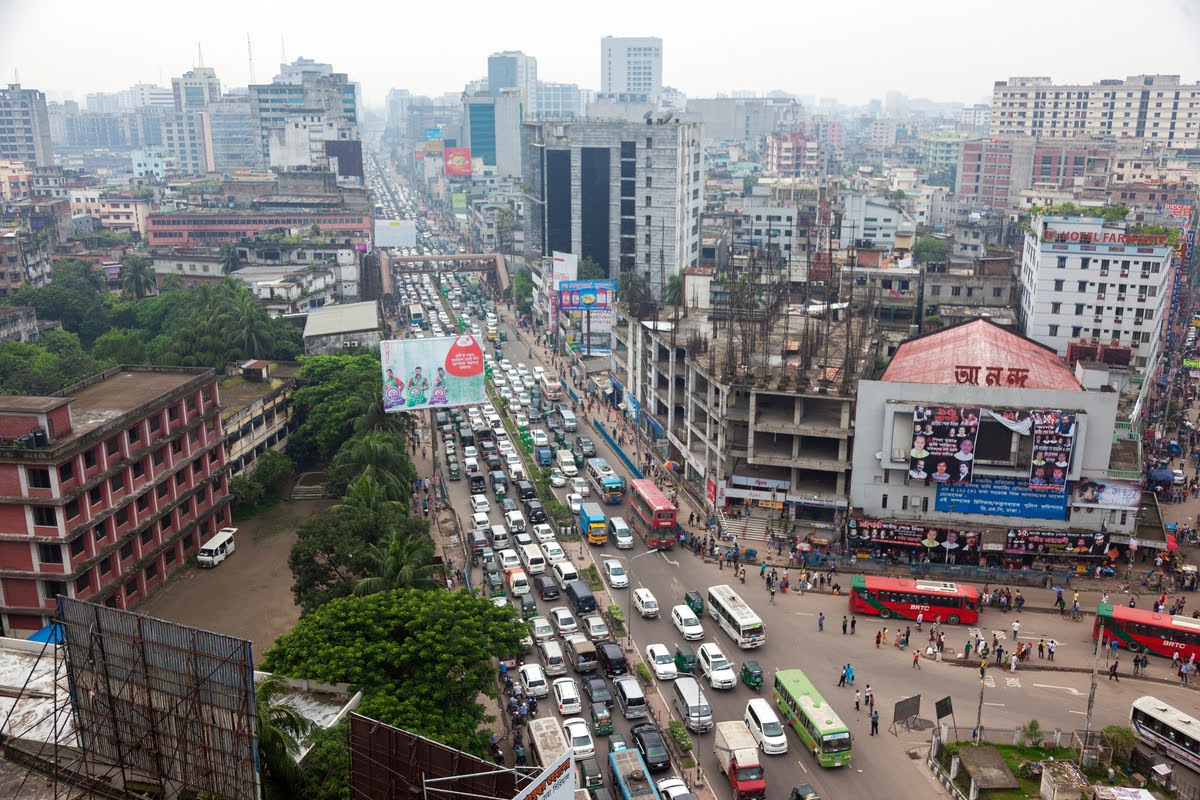
A traffic jam in Dhaka, Bangladesh. © Amazing Aerial Agency / Nicolas Chorier
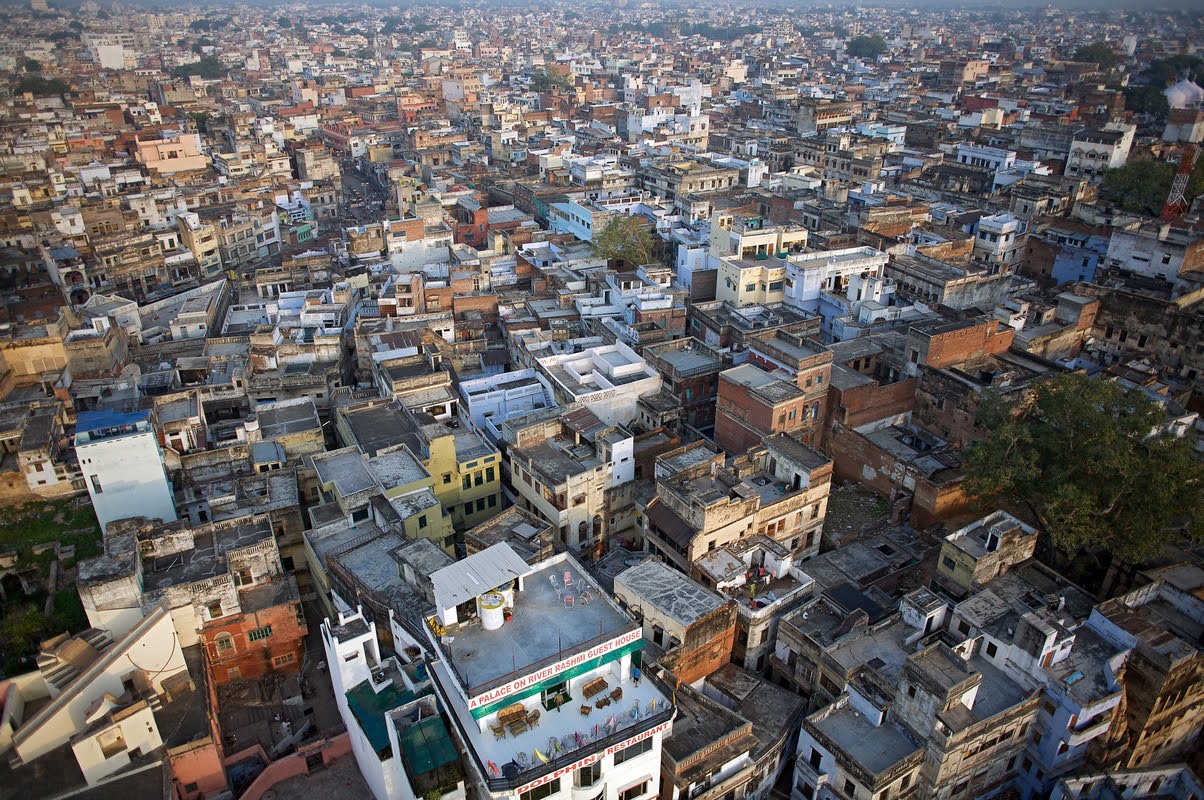
The historical Indian city of Varanasi. © Amazing Aerial Agency / Nicolas Chorier
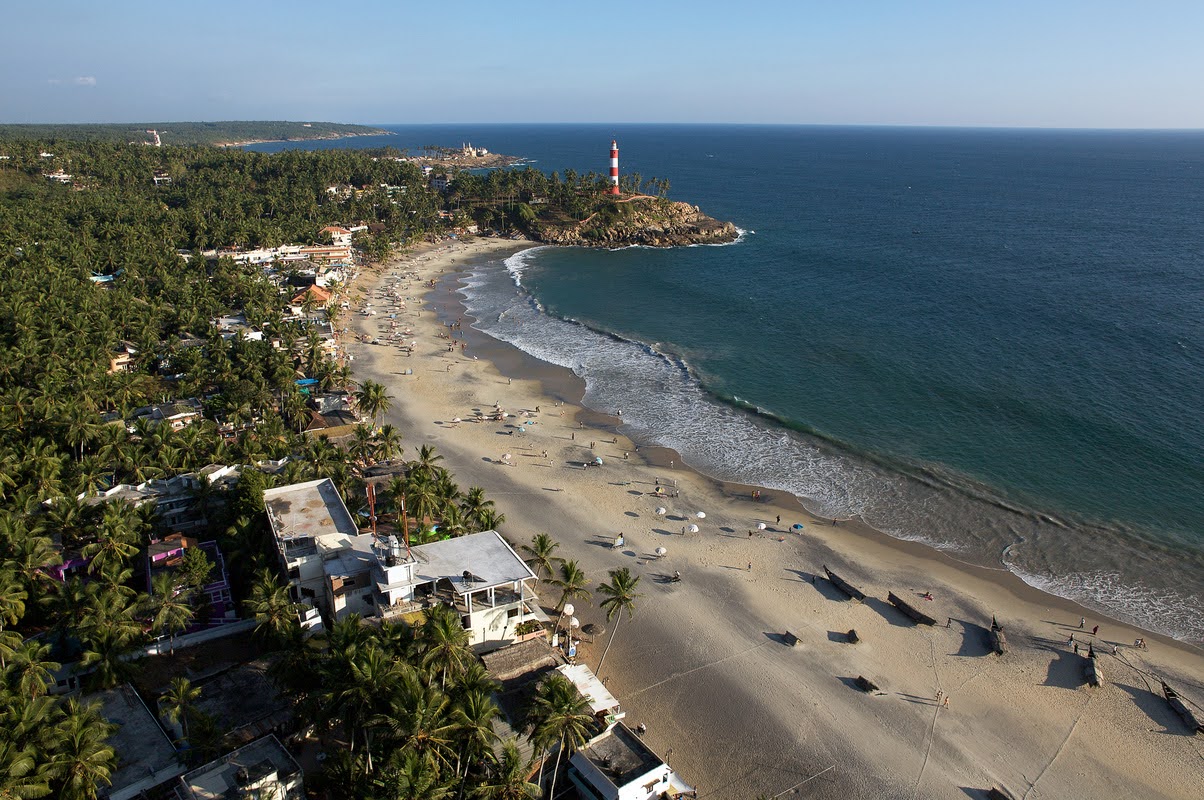
Kovalam Beach, Kerala, India. © Amazing Aerial Agency / Nicolas Chorier
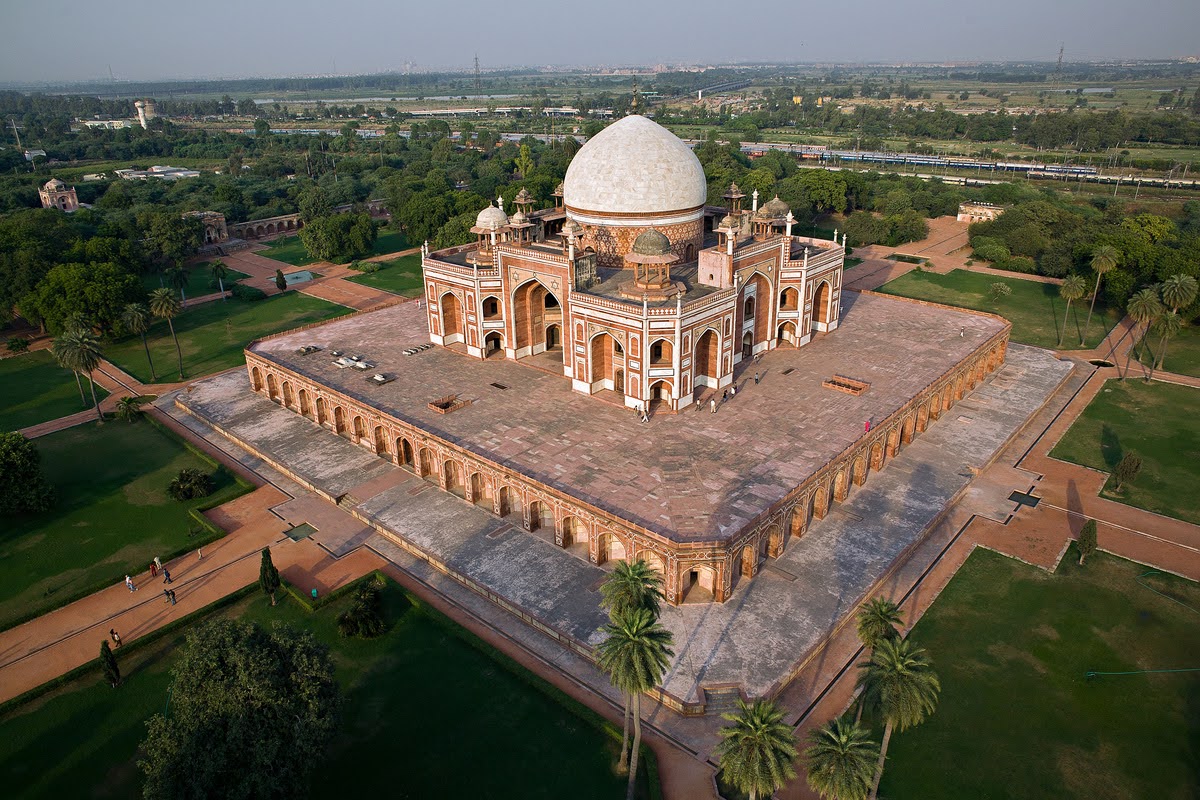
Humayun’s tomb, New Delhi, India. © Amazing Aerial Agency / Nicolas Chorier
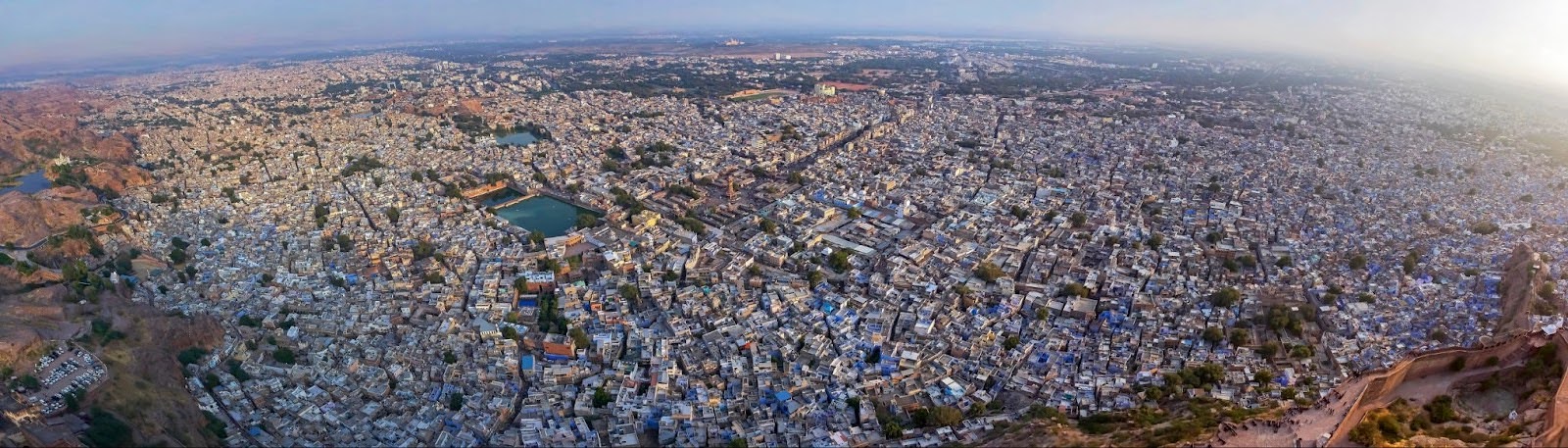
A panorama view of Jodhpur, India. © Amazing Aerial Agency / Nicolas Chorier
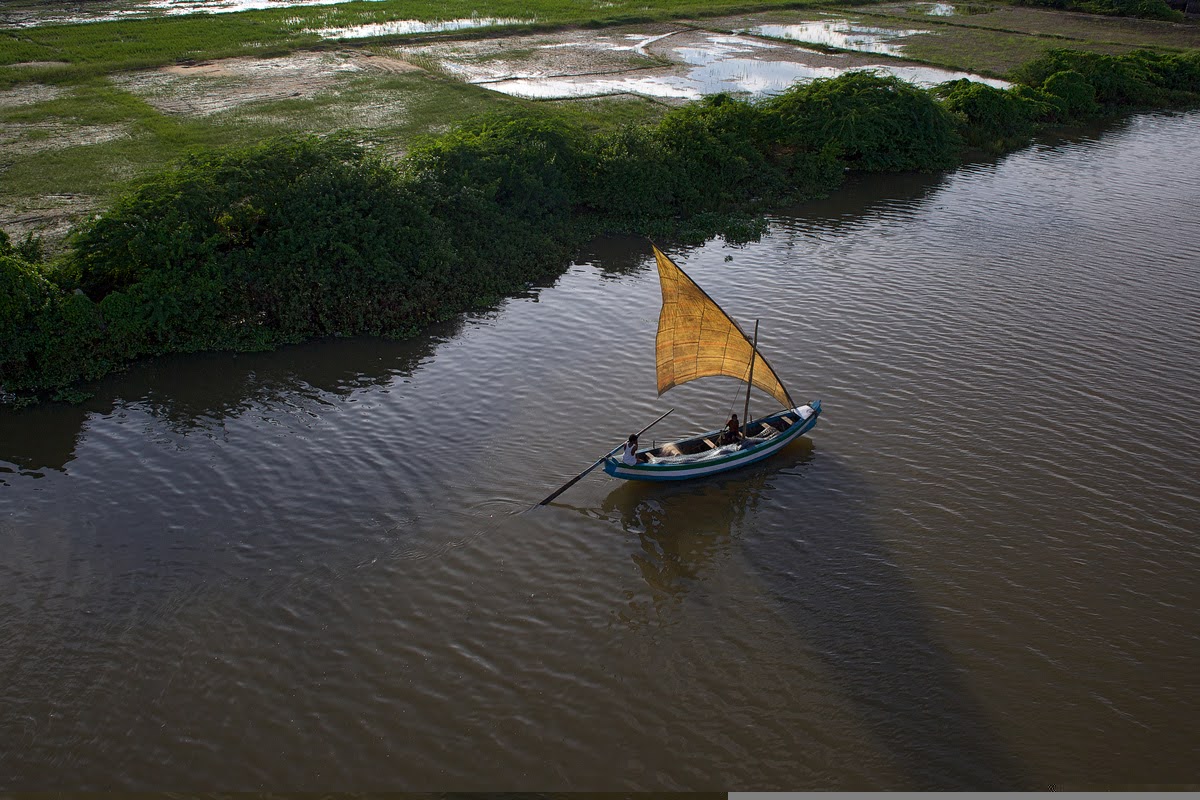
A boat sails down the Yanam River, India. © Amazing Aerial Agency / Nicolas Chorier
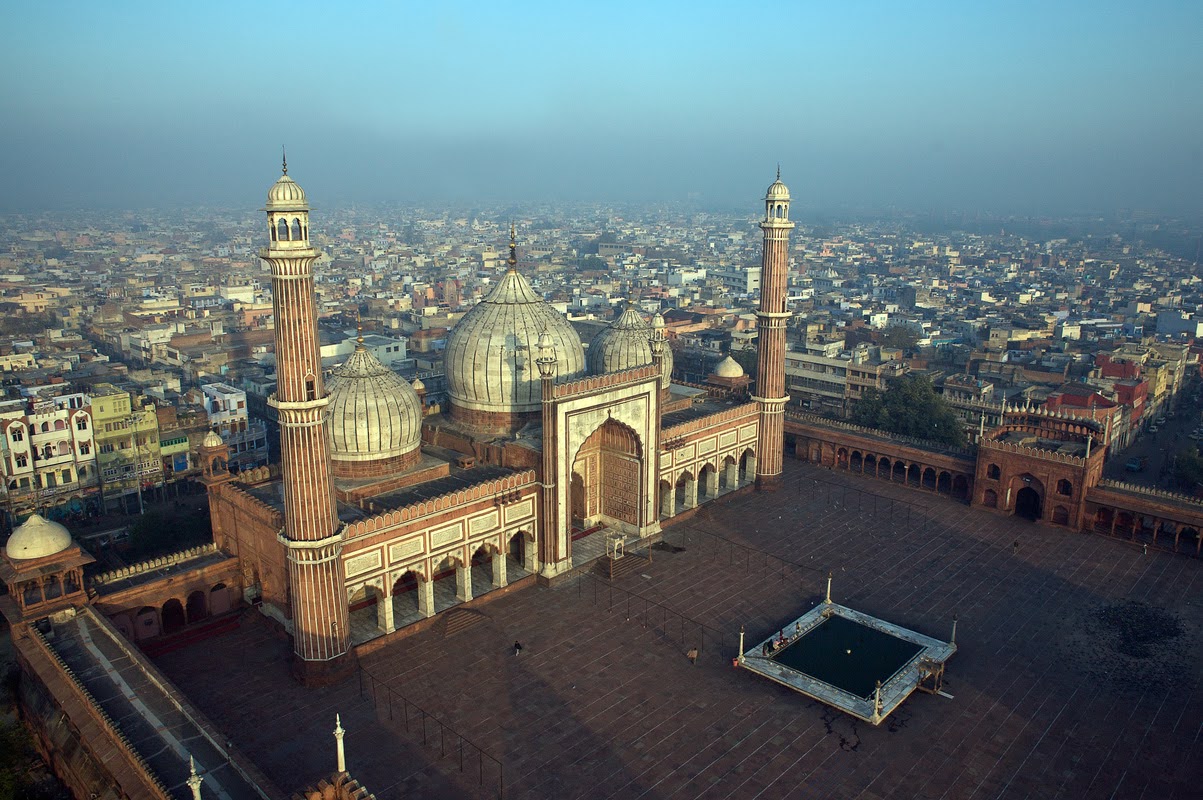
Aerial view of the Jama Masjid, New Delhi, India. © Amazing Aerial Agency / Nicolas Chorier
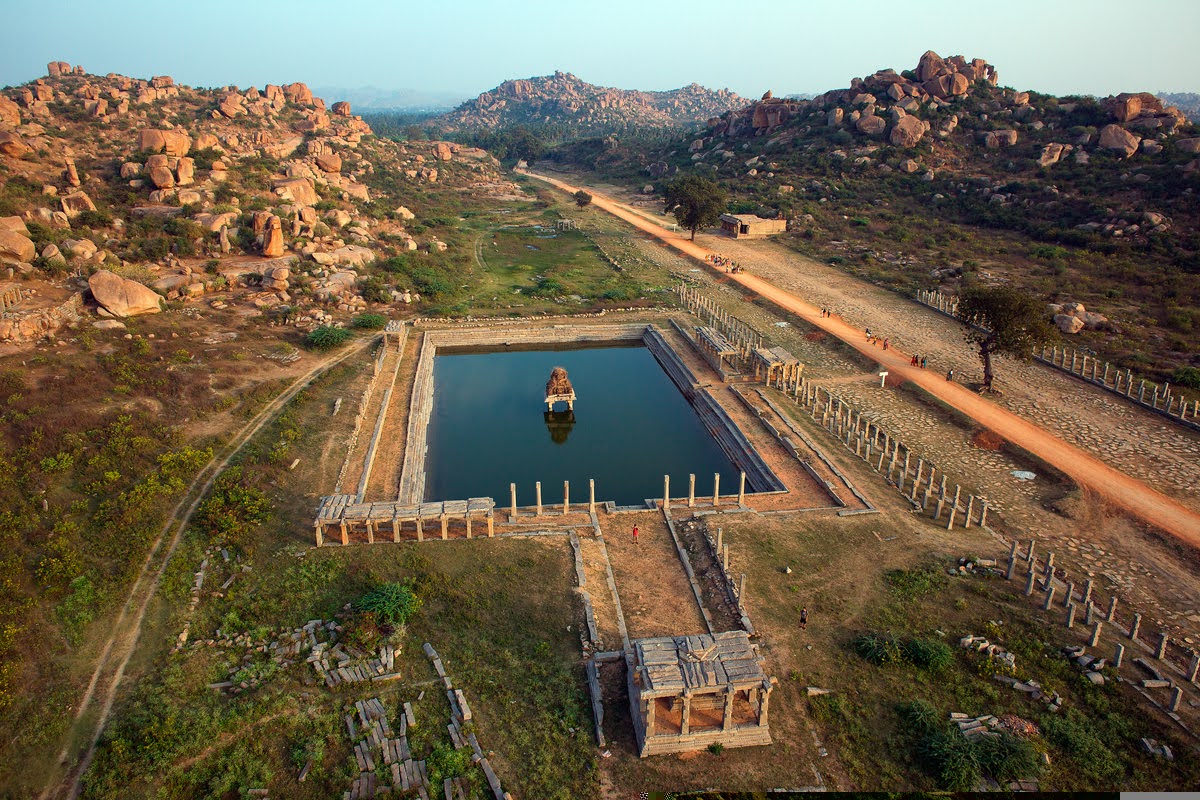
Ruins in Hampi, Karnataka, India. © Amazing Aerial Agency / Nicolas Chorier
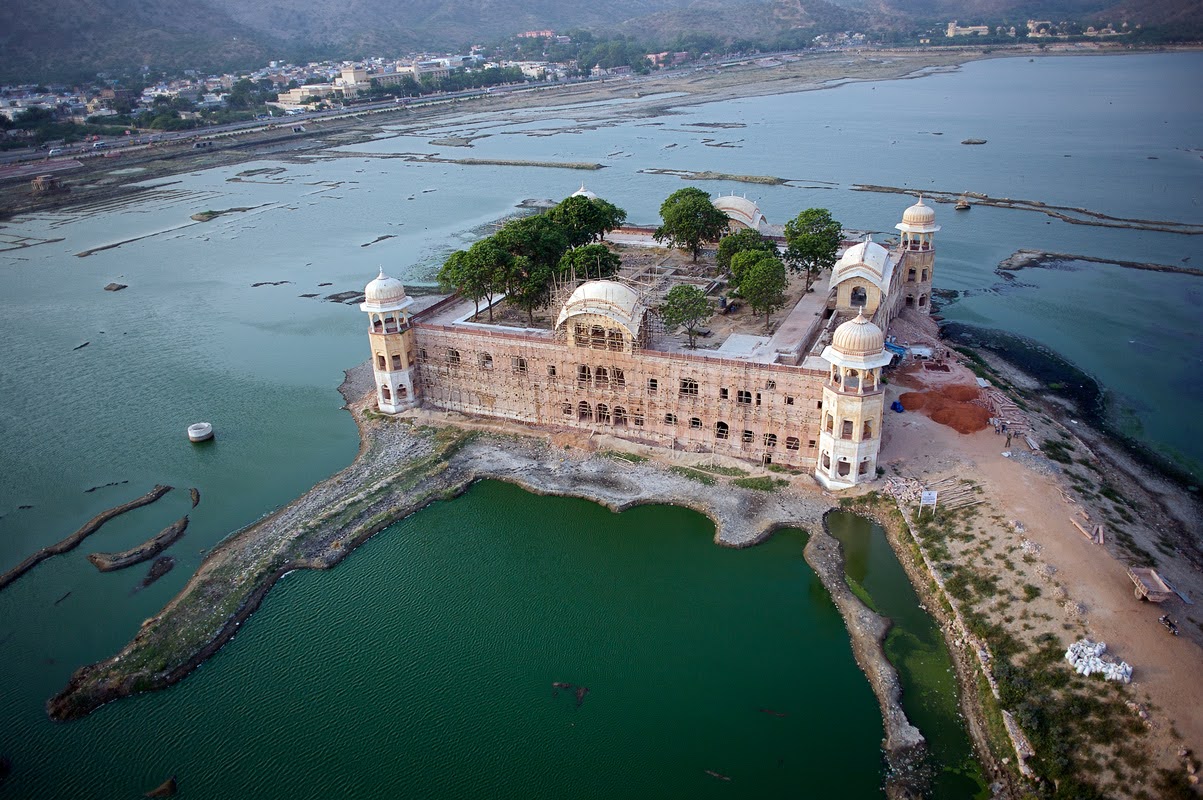
The Jal Mahal palace under restoration, Jaipur, Rajasthan, India. © Amazing Aerial Agency / Nicolas Chorier
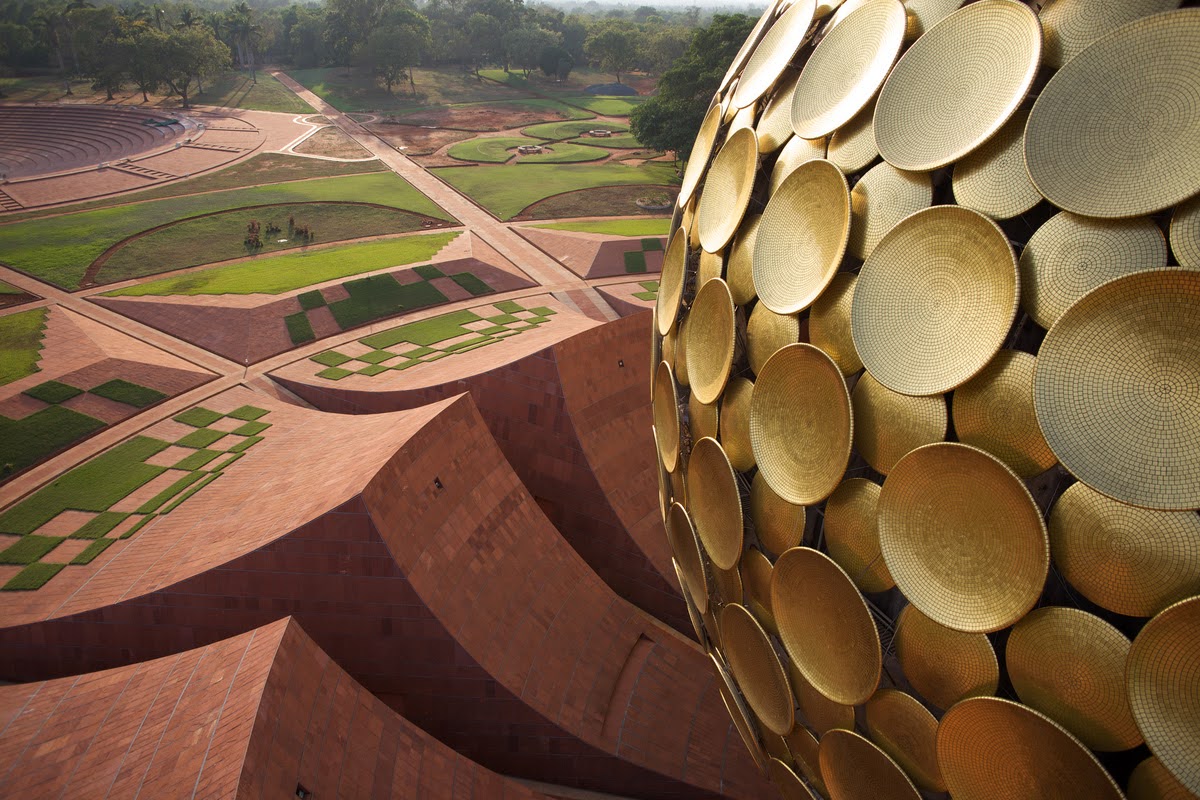
Aerial view of details of the experimental Auroville structure, Tamil Nadu, India. © Amazing Aerial Agency / Nicolas Chorier
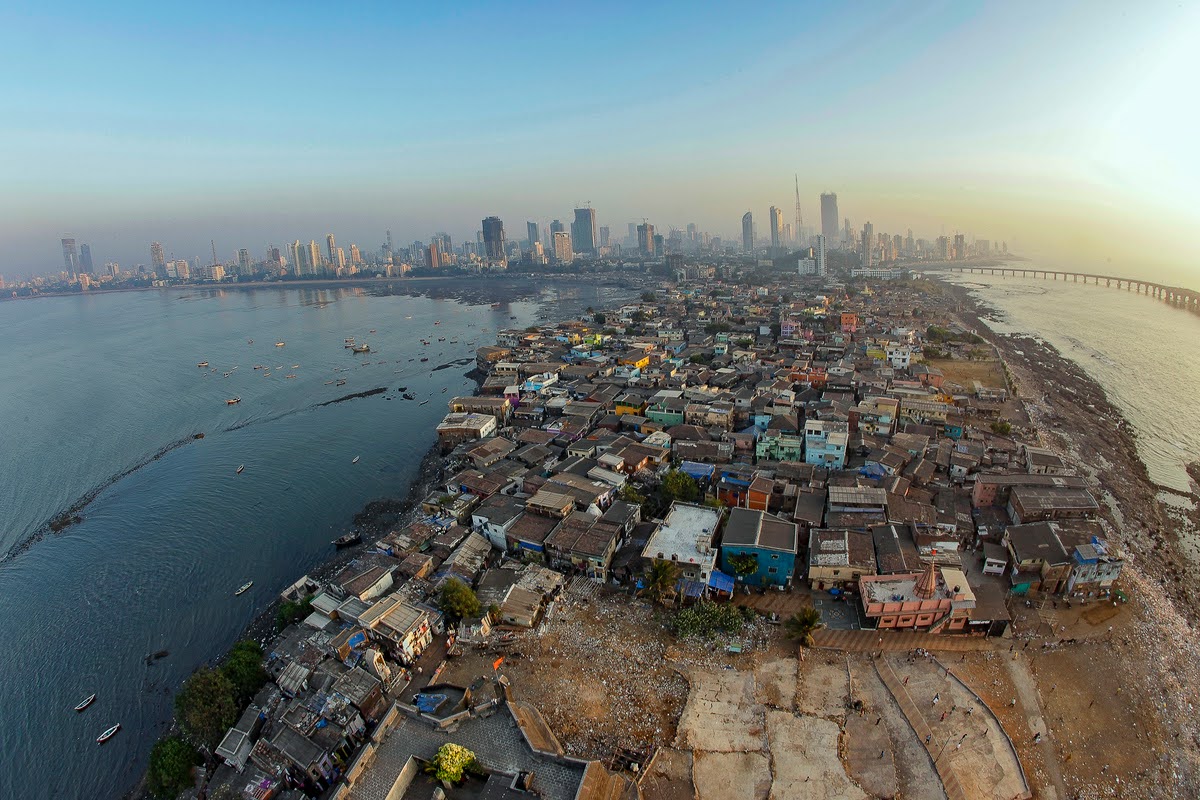
Old meets new along the coast of Mumbai, India. © Amazing Aerial Agency / Nicolas Chorier
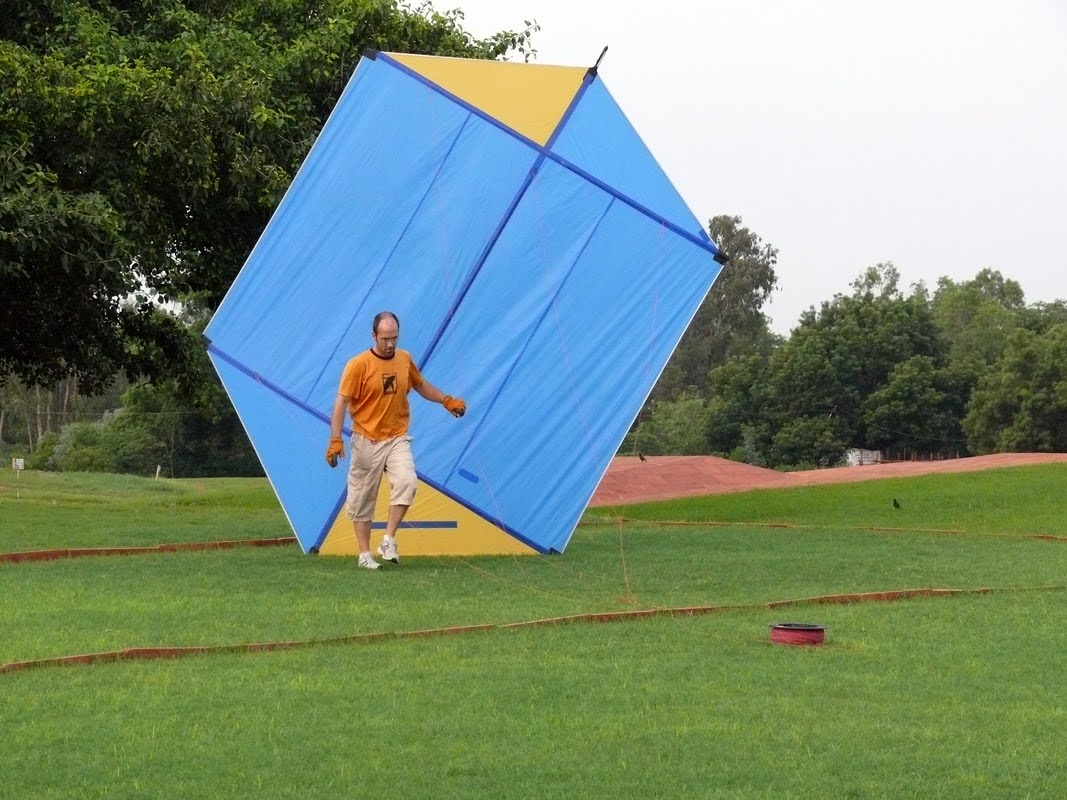
Nicolas and one of his kites in New Delhi, India. © Amazing Aerial Agency / Nicolas Chorier
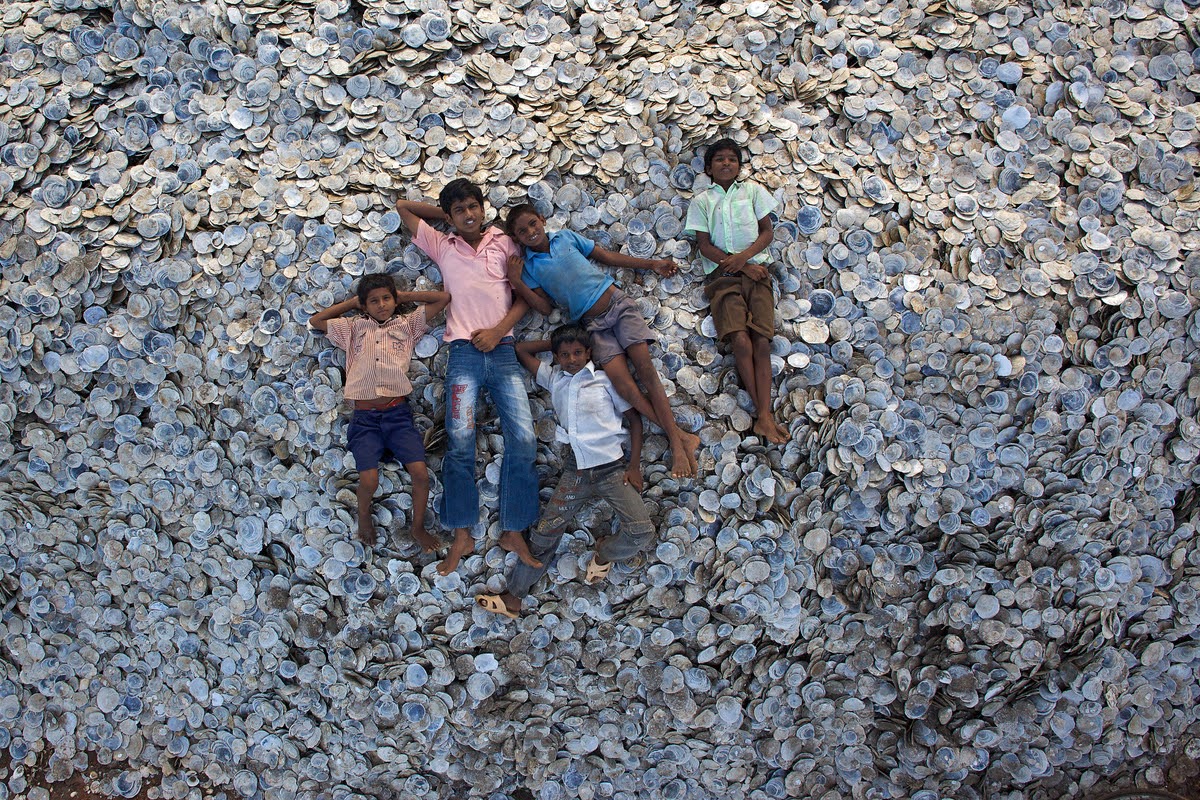
Children rest on a pile of seashells along the banks of the Yanam River. © Amazing Aerial Agency / Nicolas Chorier
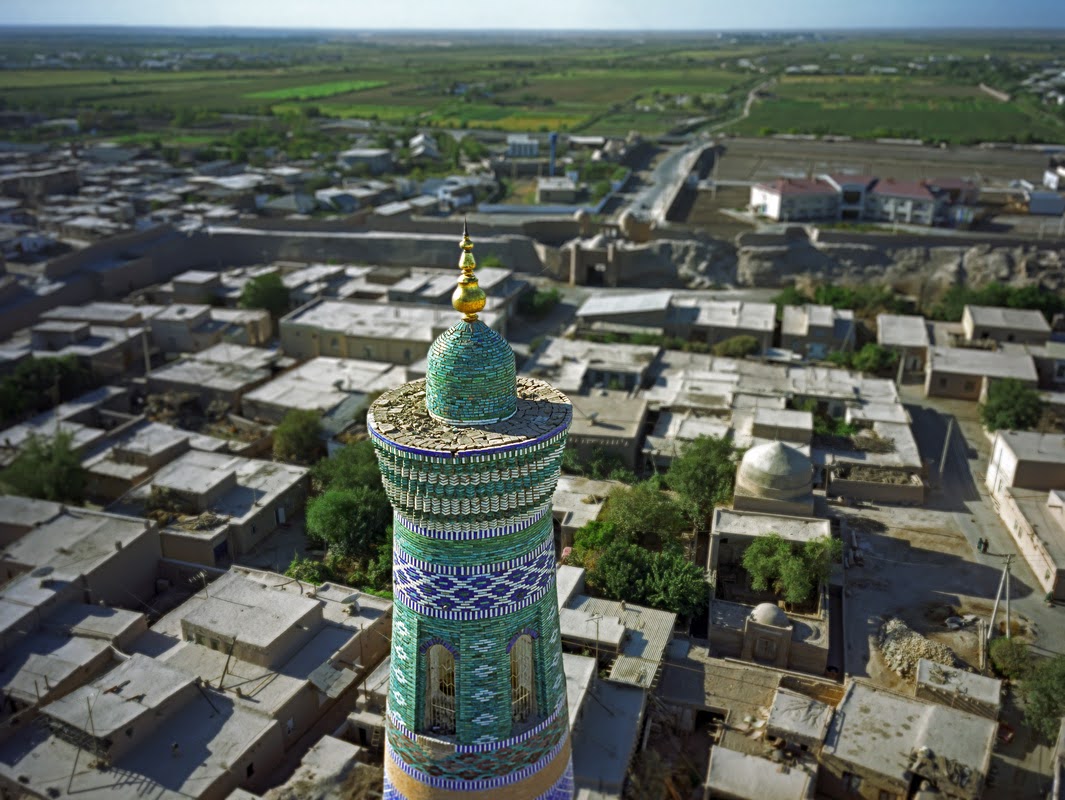
Another aerial view of the minaret, Khiva, Uzbekistan. © Amazing Aerial Agency / Nicolas Chorier
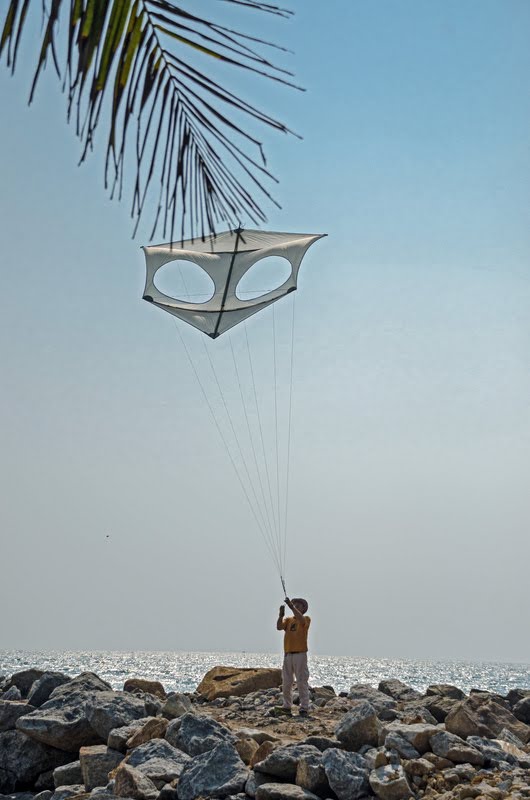
How the magic happens: Nicolas Chorier flies a kite to capture aerial photos. © Amazing Aerial Agency / Nicolas Chorier
Stay updated when we post new articles.
We hate SPAM. We will never sell your information, for any reason.